

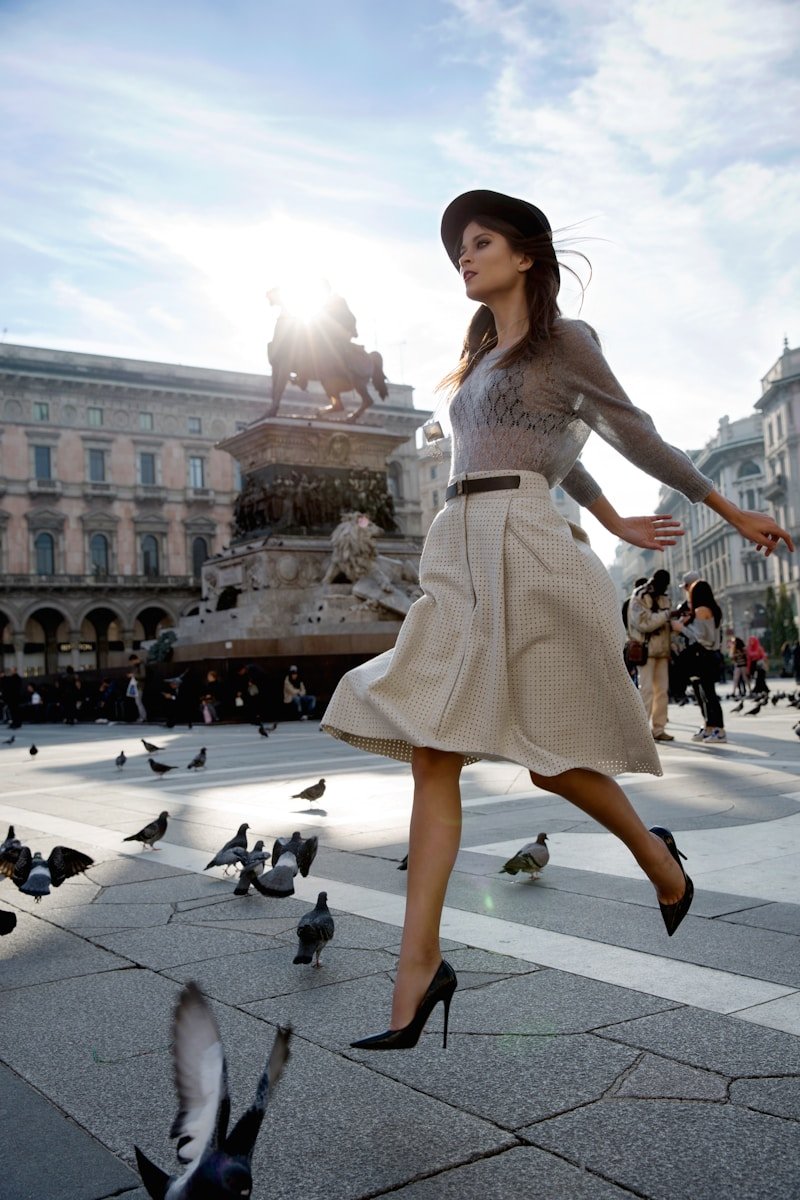
For much of the twentieth century, fashion was dictated from the top down. Designers sketched their visions in Paris, Milan, London, and New York, editors approved them in glossy magazines, and consumers followed obediently. Clothing trends moved in neat lines from runway to retail, from couture houses to department store racks. Today, that hierarchy has fractured. The most influential fashion statements are no longer born exclusively in ateliers or boardrooms; they are assembled on sidewalks, subway platforms, skate parks, and school hallways. Street style, once dismissed as casual or unpolished, has become one of the most powerful forces shaping modern fashion.
At its core, street style is not a trend but a practice: the everyday act of getting dressed in a way that reflects personal identity, cultural background, and social context. Unlike runway fashion, which is often aspirational and removed from daily life, street style is grounded in reality. It responds to weather, work, budget, and mood. Yet this very ordinariness is what gives it extraordinary influence. When thousands of people reinterpret fashion on their own terms, the result is a living, evolving archive of ideas that designers can no longer ignore.
The rise of street style coincides with broader social shifts toward individuality and self-expression. In an era that celebrates diversity, people are less willing to conform to rigid dress codes or seasonal prescriptions. Clothing has become a language through which individuals announce who they are, where they come from, and what they value. Oversized hoodies paired with tailored trousers, vintage band T-shirts under luxury blazers, sneakers worn with evening dresses—these combinations blur boundaries that once separated formal from casual, masculine from feminine, elite from everyday.
This blurring is one of street style’s most radical contributions. Traditional fashion systems relied on categories: high fashion versus ready-to-wear, daywear versus eveningwear, men’s versus women’s clothing. Street style collapses these distinctions. A silk scarf might be tied around a baseball cap. A thrifted jacket might be layered over a designer dress. The message is clear: meaning comes not from labels but from how pieces are combined and worn. Modern fashion, increasingly, is less about owning the right items and more about styling them in a way that feels authentic.
Technology has amplified this shift. Social media platforms, especially Instagram, TikTok, and fashion blogs, have turned city streets into global runways. A teenager in Seoul, a cyclist in Copenhagen, or an artist in Lagos can inspire trends halfway around the world with a single photograph. The gatekeepers who once decided what deserved attention—editors, buyers, critics—now share power with influencers, photographers, and ordinary users whose posts go viral. Fashion is no longer filtered through a few elite voices; it is crowdsourced, debated, and reinvented in real time.
This democratization has changed how designers work. Instead of dictating trends, many now observe and respond to what people are already wearing. Luxury houses collaborate with sneaker brands, streetwear labels, and artists who built their reputations outside traditional fashion circles. Hoodies, once symbols of rebellion or informality, appear in high-end collections made from cashmere and silk. Logos once reserved for skate shops are embroidered onto tailored coats. The boundary between streetwear and high fashion has not only softened; in many cases, it has disappeared altogether.
Street style’s influence is also political, whether consciously or not. Clothing has long been used to signal resistance, solidarity, and social change, and the street remains its most visible stage. From punk’s ripped shirts and safety pins to hip-hop’s oversized silhouettes and bold graphics, subcultures have used style to challenge mainstream values and assert new identities. Today’s street fashion continues this tradition, reflecting movements around gender fluidity, racial pride, environmental awareness, and body positivity. When someone wears a slogan T-shirt, repurposes old garments, or rejects conventional beauty standards, they are participating in a conversation about power, representation, and belonging.
One of the most striking aspects of contemporary street style is its embrace of imperfection. Runway garments are often immaculate, styled to perfection under controlled lighting. Street outfits, by contrast, bear the marks of life: creases, stains, mismatched buttons, scuffed shoes. These details tell stories about where a person has been and what they have done. Far from detracting from beauty, such traces add depth and credibility. Modern fashion increasingly values this lived-in quality, favoring distressed denim, raw hems, and visible mending. The polished ideal has given way to a more human aesthetic.
Sustainability is another arena in which street style is reshaping fashion’s priorities. As awareness grows about the environmental cost of fast fashion, many people turn to thrift stores, clothing swaps, and vintage markets. Street style celebrates these practices by turning secondhand finds into statement pieces. A reworked jacket or patched pair of jeans can signal creativity and conscience at once. Designers, in turn, are incorporating upcycling and recycled materials into their collections, acknowledging that the future of fashion depends on listening to consumers who care about ethics as much as aesthetics.
Yet street style’s power does not come without tensions. As soon as a grassroots look gains popularity, it risks being absorbed, commercialized, and stripped of its original meaning. A hairstyle rooted in a marginalized community may appear on a runway without recognition of its cultural history. A subcultural uniform may be sold at luxury prices to audiences far removed from its origins. These dynamics raise difficult questions about appropriation, authorship, and respect. Modern fashion, shaped by street influence, must grapple with the responsibility to honor the communities that generate its most compelling ideas.
Despite these challenges, the dialogue between street and runway continues to energize fashion in ways that few could have predicted decades ago. Designers increasingly attend to what happens outside their studios, while photographers and journalists document the creativity unfolding beyond fashion weeks. The street has become a testing ground where new silhouettes, color combinations, and attitudes emerge organically before entering mainstream circulation. Trends no longer arrive fully formed; they evolve through countless individual choices.
Perhaps the most profound change brought by street style is a philosophical one. It shifts the definition of fashion from something imposed to something negotiated. Instead of asking, “What is in style this season?” people ask, “How can I wear this in a way that feels like me?” This emphasis on agency transforms consumers into co-creators. Fashion becomes less about obedience and more about dialogue, experimentation, and play.
In this sense, street style is not merely redefining modern fashion; it is redefining what fashion is for. Clothing is no longer just a marker of status or a response to trends. It is a tool for storytelling, connection, and self-discovery. When someone assembles an outfit from unexpected pieces, they reveal fragments of their history, aspirations, and imagination. When others notice, adapt, and reinterpret that look, fashion becomes a collective art form, shaped by countless hands and lives.
The pavement, once ignored by the fashion establishment, has become its most vital classroom. From there, designers learn what resonates, what endures, and what people truly want to wear. As long as cities continue to buzz with diverse voices and styles, street fashion will remain a restless, inventive force. It reminds the industry that elegance can be improvised, that innovation often begins outside official channels, and that the future of fashion is written not only in studios and showrooms, but in the everyday choreography of people walking, working, and living in their clothes.
-
Where the Streets Lead Fashion Forward
Summary
This thoughtful essay explores how everyday style reshapes modern fashion with insight and clarity. Blending cultural history, technology, and personal expression, it shows how sidewalks rival runways as creative centers. Engaging and reflective, it captures street style’s power to democratize fashion and redefine beauty, identity, and influence today.